

The Potomac Tragedy, 1 Year Later
How the world is changing from the deadliest US aviation accident in 25 years...

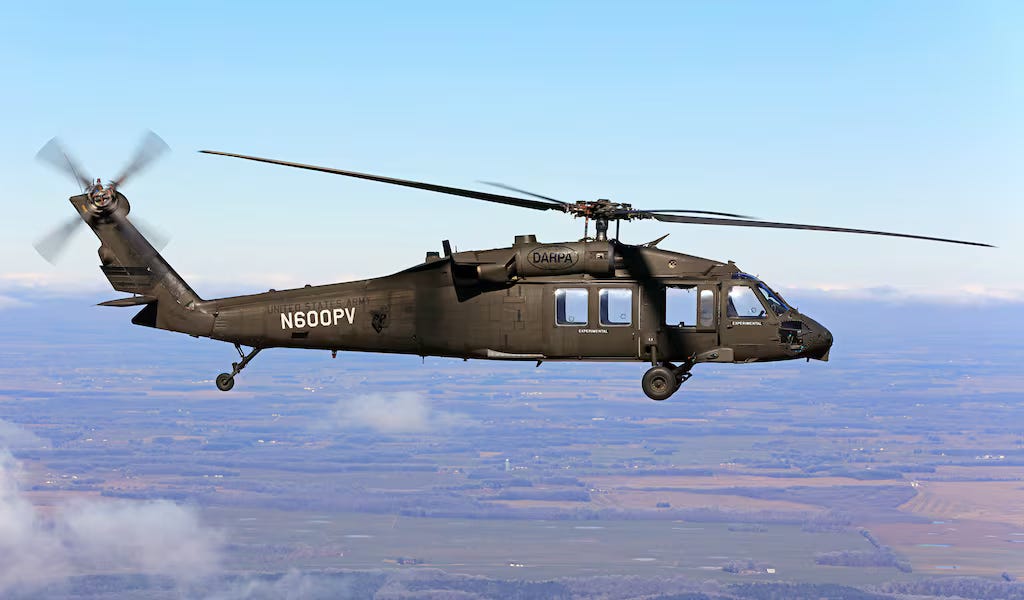
On January 29 of 2025, a US Army Blackhawk helicopter collided with an American Airlines regional jet, claiming the lives of all 67 people involved.
A lot has happened since that day. Mourning, investigating, and even some celebrating have all taken their turns as we continue to learn what exactly went wrong and how to prevent it from happening again.
Key Takeaways:
What exactly caused the mid-air over the Potomac
The response to prevent future accidents
Legislation to create a safer future
The Safety Investigation
The National Transportation Safety Board (NTSB) just recently concluded and published a year-long investigation into the mid-air collision over the Potomac. The key findings of what led to the crash were as follows:
Contributing Factor: Helicopter Route 4 was a low-level training route, which often created near-misses with other commercial aircraft arriving into DCA.
Corrective Action: This route was officially closed in March of 2025.
Contributing Factor: A failure of the “See and Avoid” doctrine, with the pilots incorrectly assuming they had visual contact with the regional jet on final. The Army crew requested visual separation, which the FAA, in some people’s opinion, was wrongfully granted, given the congested airspace.
Corrective Action: Recommendation for ADS-B In requirements and additional ATC staffing.
Contributing Factor: Altimeter issues with the Blackhawk helicopter, showing altitude deviations of nearly 100 feet.
Corrective Action: The US Army was directed to further instruct its pilots on the limitations of the Blackhawk’s altitude equipment and implement a flight data monitoring program. Whatever that means…
My Thoughts
Ignoring the fact that, yeah, nobody asked…
Good. Helicopter Route 4 is incredibly stupid and is unequivocally not worth the risk. It had a strong history of near-miss reports and closing this was long overdue.
This is just an unfortunate nature of the business. It’s well known that night vision goggles have their share of potentially dangerous pitfalls. One of those pitfalls is a lack of depth perception and the potential for incorrectly attributing a brighter light under goggles as an aircraft that’s closer to you.
The FAA set a 200-foot ceiling on HR4, with the intent to provide at least 75 feet of separation with aircraft on final for DCA. Razor thin? Absolutely. Regardless, it’s inexcusable to be above, or frankly, anywhere near that 200-foot upper limit. The NTSB chalked this up to known altimeter issues with the Blackhawk but for whatever reason the Army pilots weren’t flying RADALT* is beyond me and so incomprehensibly stupid. Keep in mind this is me, speaking as a fighter pilot who knows nothing about rotary aviation.
*For those wondering what the big deal is, RADALT stands for Radar Altimeter. It uses a radar to produce highly accurate altitude readings. In contrast, the barometric altimeter (what the Blackhawk pilots were flying off of) utilizes pressure readings and a calibration number given from ATC, which can change several times during a flight.
The ROTOR Act
Nothing I love more than a cringey acronym. And ROTOR definitely leaves me ROTFL-ing.
The Rotorcraft Operations Transparency and Oversight Reform Act was written in an attempt to ensure that what happened in DC in 2025 would never recur.
The bill, which failed to pass the House of Representatives yesterday, February 24, had the following provisions:
Mandatory ADS-B In Integration: All aircraft currently required to broadcast their location (ADS-B Out) would also be mandated to install integrated ADS-B In technology, providing clearer traffic awareness to pilots.
Repeal of Military Loopholes: The act would strip away “sensitive government mission” exemptions that previously allowed military helicopters to fly through congested civilian airspace without broadcasting their position.
Universal Safety Standards: It establishes a “single set of rules” for all civilian and military aircraft operating in high-density Class B and C airspaces, ensuring everyone from private pilots to Army crews uses the same tracking technology.
Airspace Safety Audits: The FAA would be required to conduct immediate, comprehensive safety reviews of all major U.S. airports with “mixed traffic” to identify and fix dangerous intersections between helicopter routes and commercial flight paths.
Opponents of the bill claim that forcing military aircraft to always be broadcasting their location poses a security risk and that the ROTOR Act only covers a fraction of the NTSB recommendations, which could be better served via the ALERT Act.
Not nearly as fun, the Airspace Location and Enhanced Risk Transparency Act is intended to be a more comprehensive solution. Critics of this bill claim it’s watered down and could delay real changes for years.
What are your thoughts? With aviation already being one of the safest industries across the globe, was this just a freak accident or does real change need to come in the form of the ROTOR or ALERT Act?