

7 Days With Whoop as a Pilot
What a wearable fitness tracker taught me about recovery, sleep, and surviving the skies


I’ve been fascinated with technology since I was very young. I just didn’t know I had a gift for it.
That changed when my grandmother reacted with such amazement after seeing me install Age of Empires II on the family computer at the age of five.
The ego boost was short-lived. I quickly realized she offered the same level of enthusiasm when congratulating her dog, Chuckie, for finally defecating and NOT eating it.
Not all hope was lost.
After an engineering degree and 20 years of highly competitive athletics, I joined the Navy to fly fighters, thinking that must be the apex intersection of brains and brawn.
That was until I naively asked the youngest guy in the squadron to help me figure out why my flight plan wasn’t submitting on Foreflight. He ripped the iPad out of my analog hands, fixed my errors, and called me a ‘Boomer’.
Persevering through it all, my love for science and technology still burns bright. That, mixed with my love of health and fitness, makes me the perfect sucker for wearable tech or anything with a heart rate monitor.
Health Trackers for Flight
For the last half-decade, my life has revolved around flying high-performance military aircraft and training my body to adapt (or not) to the physical demands of being a fighter pilot.
I recently wrote about what my Garmin watch taught me about adapting to high-performance flight—a weird mix of personal memoir and a poorly done science experiment.
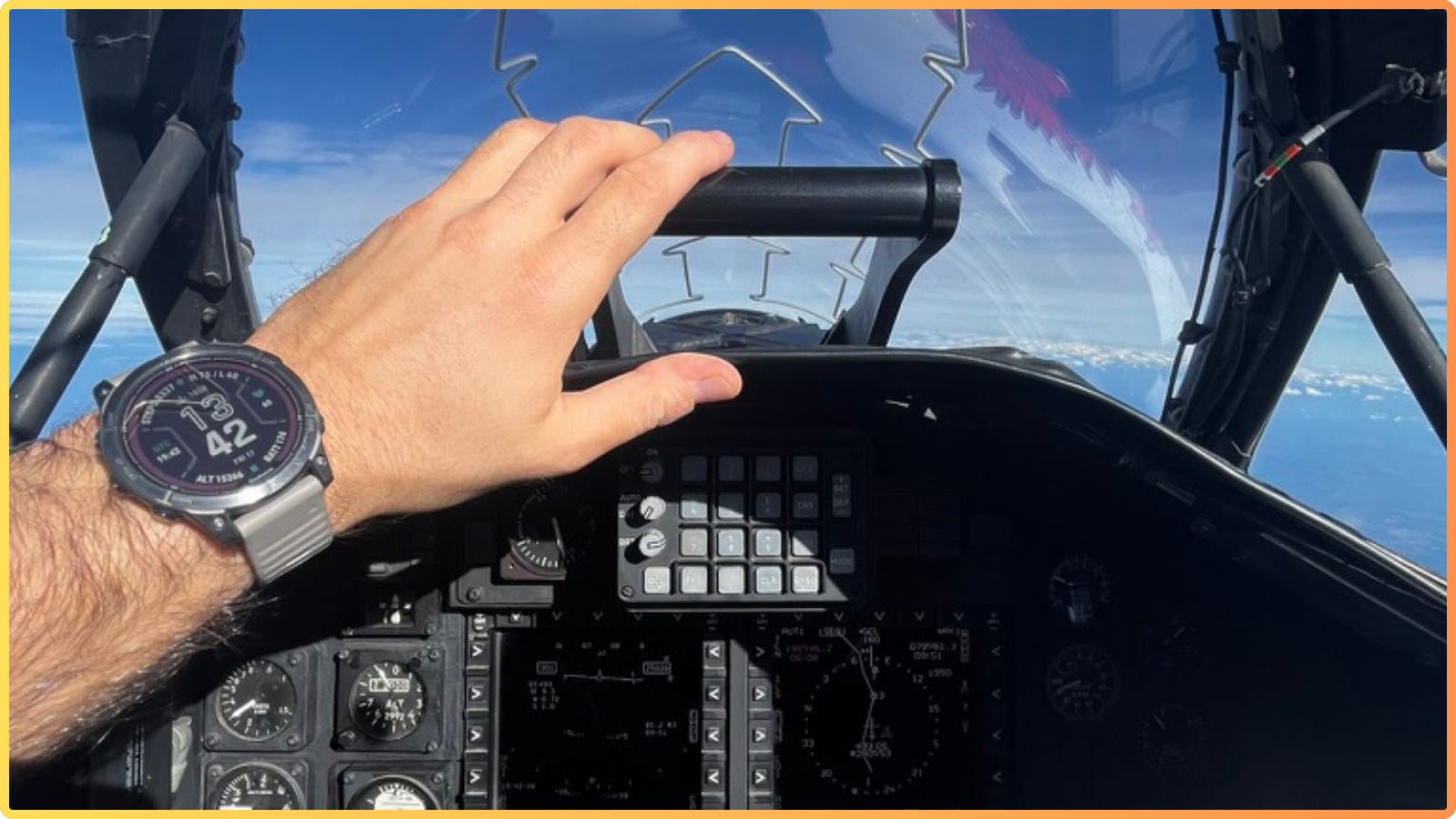
Although Garmin might be the top dog of GPS-focused activity tracking—and a watch I wear daily—there is another big player in the space: Whoop.
Whoop is a device very similar to any other fitness tracker, but its focus is on recovery and ensuring the stress you put on your body is managed optimally so you’re recovered for the next day.
In my world, this can mean being maximally prepared going into a long day of dogfighting.
So when I saw Chase partnered with Whoop for a free year membership, I had to try it out.
Why the Whoop Band Caught My Eye
When searching my email inbox the other day, I discovered I ordered and canceled a Whoop 3.0 order back in 2020. I remember thinking it was cool, but I didn’t feel it was worth the cost to try it after all.
So what changed and why is this time different?
Maybe it was my indoctrination into the cult-like world of health and fitness optimization via Andrew Huberman, Bryan Johnson, or Peter Attia.
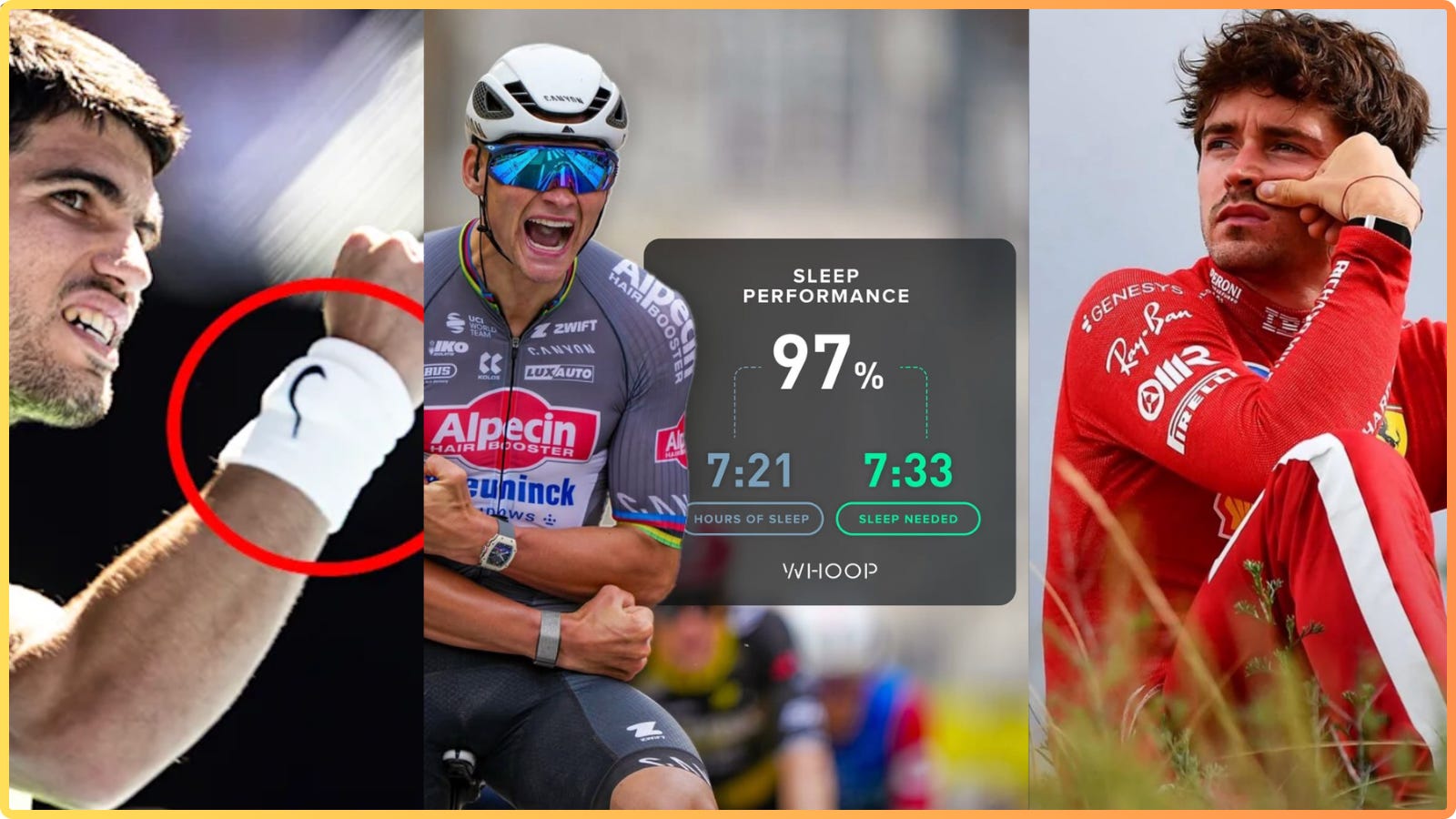
Or maybe I finally fell for the marketing, seeing it on the wrists of many of my favorite athletes like Charles Leclerc or Mathieu van der Poel.
Subconscious brainwashing aside, this time, the reasons for trying it out were simple: sleep, recovery, and figuring out what my diet is actually doing to my body.
My Garmin Fenix is still a great watch that I use daily and it does have sleep tracking as well as a newly introduced lifestyle journal for correlating behaviors to results like Whoop.
The issue is that Garmin’s sleep algorithm is one of the worst, and if you can’t accurately track sleep and therefore recovery, the cause-and-effect correlation is weakened. Not to mention the Garmin Connect app is absolute garbage.
Waking up to my Garmin telling me to ‘take it easy today’, but not knowing what I did in my training or lifestyle to warrant this advice, caused me to quickly disregard it as spam.
Whoop’s hardware is nothing special beyond being extremely comfortable to wear. Where it really shines is in the software. It technically measures all the same data as any other popular device out there, but where Whoop differentiates itself is helping you understand what to do with it.
The Data
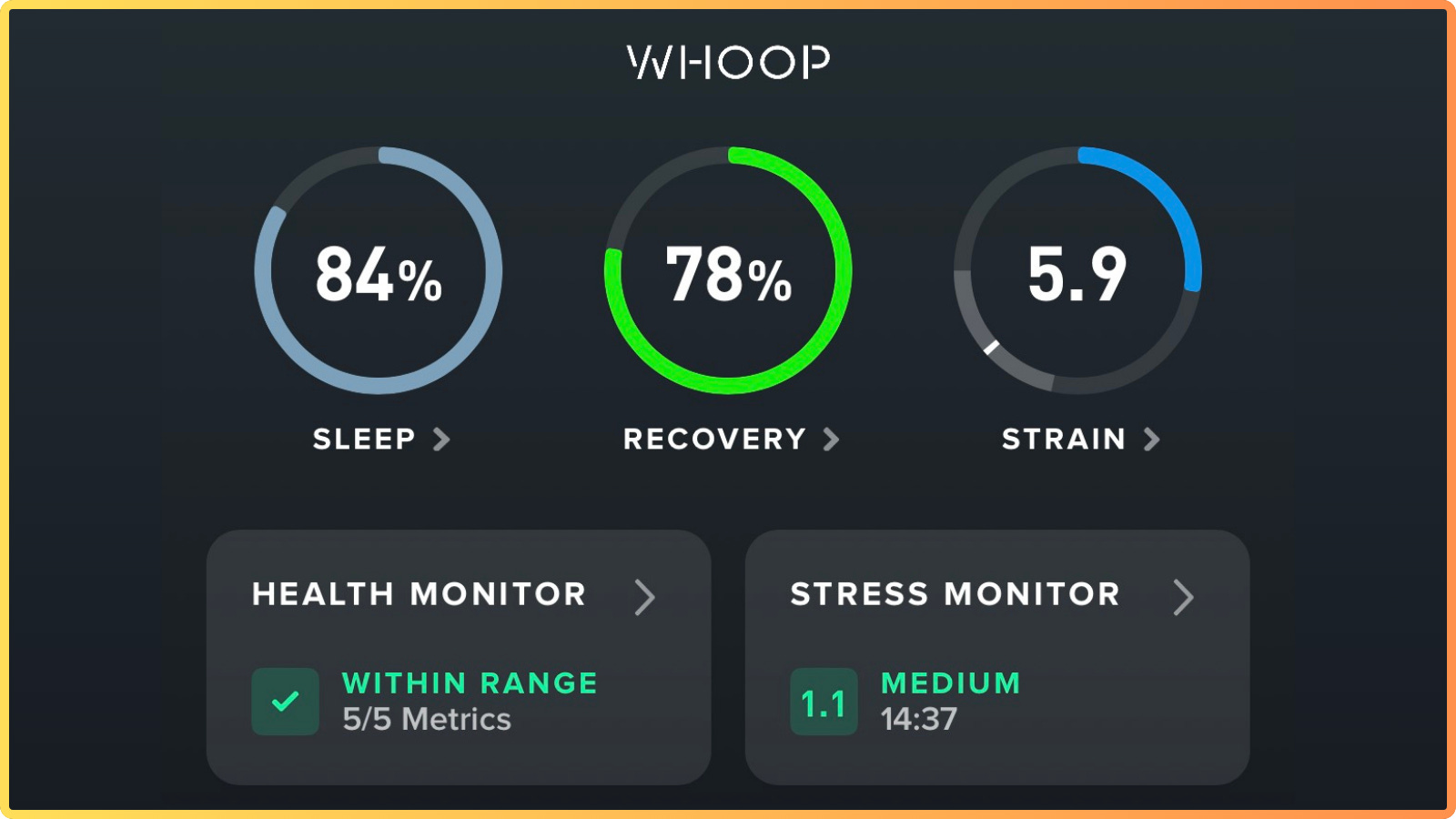
Whoop provides feedback by measuring three areas of health: sleep, recovery, and strain. It displays this data, similar to Apple, in a ring layout.
Ideally, you fill up both the Sleep and Recovery rings every day, and the Strain ring to the algorithm’s recommendation. As the robot-subordinate human, you must always comply with Overlord Algorithm.
Just kidding (unless you’re reading this, Overlord). Let me explain the nuance of each category.
Sleep
The sleep score is calculated via Hours vs. Needed, Sleep Consistency, Sleep Efficiency, and High Sleep Stress.
All pretty self-explanatory. Did you sleep long enough? How about the quality? Did you use the time in bed to actually sleep, or were you tossing and turning, dreading the AI takeover?
What shocked me: Sleep Consistency. Maybe I’ve heard it a hundred times and it just went in one ear and out the other, but I never realized how impactful it is to go to bed and wake up at the exact same time. This is probably the biggest thing I’ve learned from my Whoop so far and has been my eye-opening (or closing?) to see.
Recovery
Recovery is calculated via Heart Rate Variability (HRV), Resting Heart Rate, Respiratory Rate, and Sleep Performance.
Whoop, like any other wearable, is good at tracking cardio-based activities but struggles with weight-lifting activities. This is because the primary thing it measures is heart rate. That being said, however you decide to wear yourself out, Whoop can determine during the following night’s sleep how much of an impact that workout or near-death experience driving on Texas roads had on your body. And it’s really good at it.
What shocked me: I have a tendency to do whatever workout sounds good to me that day. Going for an Alpe du Zwift PR on a hungover Sunday comes to mind—this confuses me too, trust me. But now, I do feel my recovery score is often in-line with how I feel and listening to it has helped me get more out of my workouts so far.
Strain
Strain is calculated via time in Zone 1-3, Zone 4-5, Strength Activity Time, and Steps. What is it? Some unitless number from 0 to 21 that seems to gain context as you use it.
This is where Whoop receives its biggest criticisms. For steady-state cardio, like running or biking, the heart rate data collected is quite good. For steps, it’s good-not-great, often performing worse than the Apple Watch or Garmin. For strength or HIIT, however, the Whoop often suffers when worn on the wrist. Similar to most wearables, but Whoop is often criticized for performing worse in this scenario than competitors.
What shocked me: The HR data may not be that good for HIIT/strength. Fine, whatever. But these skew toward anaerobic activites anyways. What really impressed me is, after the weightlfting session, you can input the exact workout with weights, reps, and sets, and your strain will update accordingly. This is all very subjective, of course, but Whoop is at the forefront of sports science and I find this so impressive. Even if it’s maybe not perfect yet.
Looking back to seven days ago, these were some of the bigger questions on my mind. I’m excited to finally have some answers.
7 Days Whoop FAQ
Why don’t I have a Recovery score yet?
It takes four days and three nights of sleep to calibrate.
Is Whoop worth trying if you already own a Garmin or Apple Watch?
I would say yes? Apple Watch provides basically no recovery/strain insights on its own and Garmin’s is just really rudimentary.
Do I have to start an activity to record the data?
No! It usually detects when I’m doing something, but it is hit or miss on whether it labels that activity as something specific, like running, or keeps it generic.
Does wearing it 24/7 get annoying?
No, actually, it’s so comfortable I can’t believe I ever wore my bulky Garmin Fenix to sleep.
How accurate is the sleep tracking compared to how you actually feel?
I’d say extremely accurate and one of the best surprises. My Garmin seemed to say I slept poorly all the time; the Whoop so far feels incredibly aligned with how I’m feeling.
Has it actually changed your behavior yet, or are you just watching numbers?
Just watching the numbers and waiting mostly, but I have tried to be more consistent with my sleep schedule since, even though it won’t provide a recovery score, you still can see the raw HRV or RHR values.
What I’m Looking Forward to Next
Over the coming two weeks, I’m really excited to see what I learn as the Whoop “unlocks”.
Whoop Age
After 21 days, Whoop calculates your "Whoop Age", a cardiovascular health score that tells you whether your body is aging faster or slower than your actual age. After years of stressful training and pulling Gs for a living, I'm equal parts excited and terrified to see the verdict.
HR Tracking: Whoop vs. Garmin
One of the biggest criticisms of Whoop is its heart rate accuracy compared to dedicated sports watches, and I happen to have one of the best often strapped to my other wrist. Over the next few weeks, I'll be running both simultaneously to see how in agreement they are.
The Journal: Connecting Dots
The Whoop Journal lets you log daily behaviors like diet, alcohol, caffeine, stress, and over time correlates them directly to your recovery score. After a few weeks of consistent logging, I hope to receive some non-scientific statistical analysis from the app.
Your Support
I write everything for free in the hopes that it will inspire and educate on what it’s like to fly planes in the world’s greatest Navy and to spread the joys of aviation in general.
If you enjoyed this article, you can show your support by checking out my store on Etsy, where I sell really cool aviation-themed streetwear clothing. It’s all designed by me, a real-life, very-average fighter pilot.
