Bevel vs WHOOP: Which Is Better in 2026? (A Pilot’s Perspective)

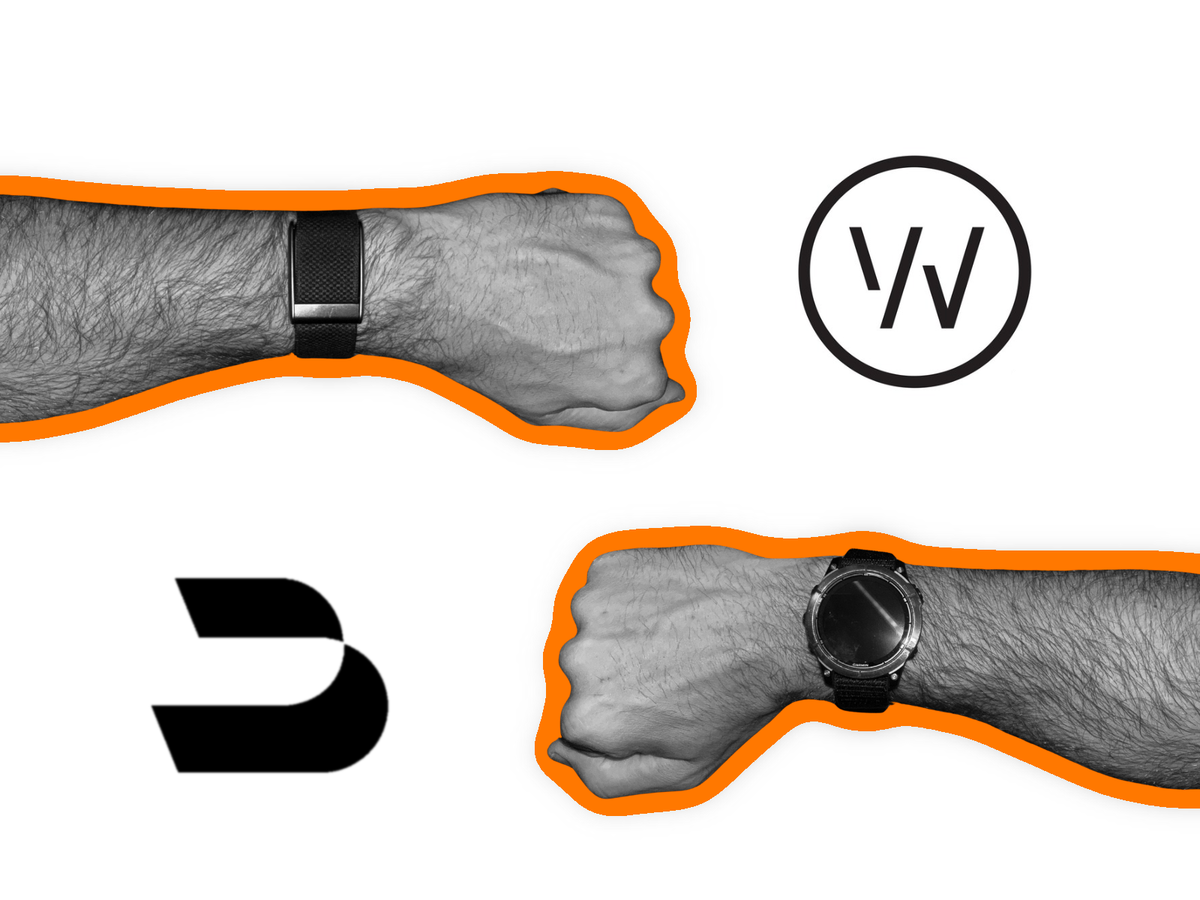
The Clear Winner
Is unclear. Although both are very similar (obviously, since Whoop is suing Bevel), I think they both offer some unique advantages and that’s why I’ve been going back and forth during my months of testing and fiddling.
My general feeling is that Whoop is backed by more science and has a more “secure” ecosystem, while Bevel is just a really good aggregator and dashboard for fitness data.
As of writing this, I’m sticking with Whoop.
As a military pilot, I’ve always been interested in my fitness, recovery, and readiness to fly the next mission. When Chase announced a partnership with Whoop back in May essentially announcing a free year subscription, I jumped at the chance.
So although this may be a slightly skewed analysis since I don’t have any skin in the game for my first year with Whoop, I thought I’d write down my thoughts so far comparing the two.
Heads up: this post contains referral and affiliate links, including Amazon Associates links. If you sign up or buy through them, I may earn a commission or membership credit at no extra cost to you. As an Amazon Associate I earn from qualifying purchases. Nobody sponsors The Flyby — I bought everything reviewed here.
What Is Bevel, and Why Does It Feel So Much Like Whoop?
If you’re reading this, you’re probably not a total novice to the fitness / wearables world, so I’ll spare you the in-depth explanation.
In short, Bevel is sort of the “new kid on the block”, bringing a Whoop-like experience to everyone. So much so in fact, that if I had found Bevel before getting my Whoop I probably would be a die-hard subscriber right now.
The reason Bevel is a bit unique in this space is they are purely a software company: you can use any wearable you want. It compiles all the typical metrics measured by your Apple/Garmin/Oura device (similar to Apple Health) and displays the data in one dashboard of Sleep, Recovery, and Strain (similar to Whoop). Also similar to Whoop, Bevel helps you correlate behaviors to recovery and sleep and provides you with an AI assistant to analyze and provide recommendations or hallucinations to your heart’s content.
First, Does Bevel Work With Garmin?
Yes, in fact, that has been my testing setup with Bevel. I love wearing my Garmin Fenix 7 Pro, but have found the sleep reporting is just lacking. That, combined with the Connect app (which I just despise), was the entire reason I looked into alternatives. Conveniently, just as I was starting with Bevel, they announced a direct-to-Garmin integration, providing faster updates and eliminating the need to sync through Apple Health.
My hope was that although Garmin doesn’t provide actionable feedback on my sleep, Bevel would be able to since it would use the raw sleep data from Garmin and create its own Sleep and Recovery scores. Which it does!
Kind of…
Bevel still uses Garmin’s assessment for duration and phases of sleep but further personalizes it for you over time. Still useful in that if I usually sleep for six hours with moderate sleep efficiency, sleeping for seven hours with slightly higher efficiency gets rewarded in Bevel. My experience with Garmin is that I just always receive a sleep score in the 60’s, where Bevel seems to correct for this and sort of amplify the “good” and “bad” scores so I can actually determine what’s moving the needle for recovery.
Additionally, whether it’s Bevel or Whoop, it does seem that the most important metric the softwares use for correlating good and bad habits is recovery. And while Bevel and Whoop record and report HRV, RHR, and any other recovery metrics slightly differently, the HRV pattern on Bevel (via Garmin) roughly matches that of my Whoop.
So, yes: Garmin and Bevel work perfectly together. And when you pair it with a chest HRM, you get the best data possible (even better than Whoop's optical).
Bevel vs Whoop: Price and Subscription
I would say this battle was far more lopsided when Bevel Pro was only $50 a month… My initial feeling was for less than $5 a month, Bevel is an incredibly compelling option—if you already owned an Apple Watch or Garmin, adding a $5 per month subscription to get the benefits of Whoop was a no-brainer.
But now that the subscription is $15 per month or $100 annually AND you have to bring your own device? That definitely changes things.
On one hand, Whoop with its never-ending subscription is a pain in the ass. On the other, the entry fee is zero and you “just” need to pay $30 a month in perpetuity.
Bevel, however, has the up-front cost of a device of at least a couple hundred dollars plus the recurring subscription.
If you already own a device compatible with Bevel, then this is a bit of a non-issue.
But comparing apples to apples, an annualized cost chart would look a bit like this:
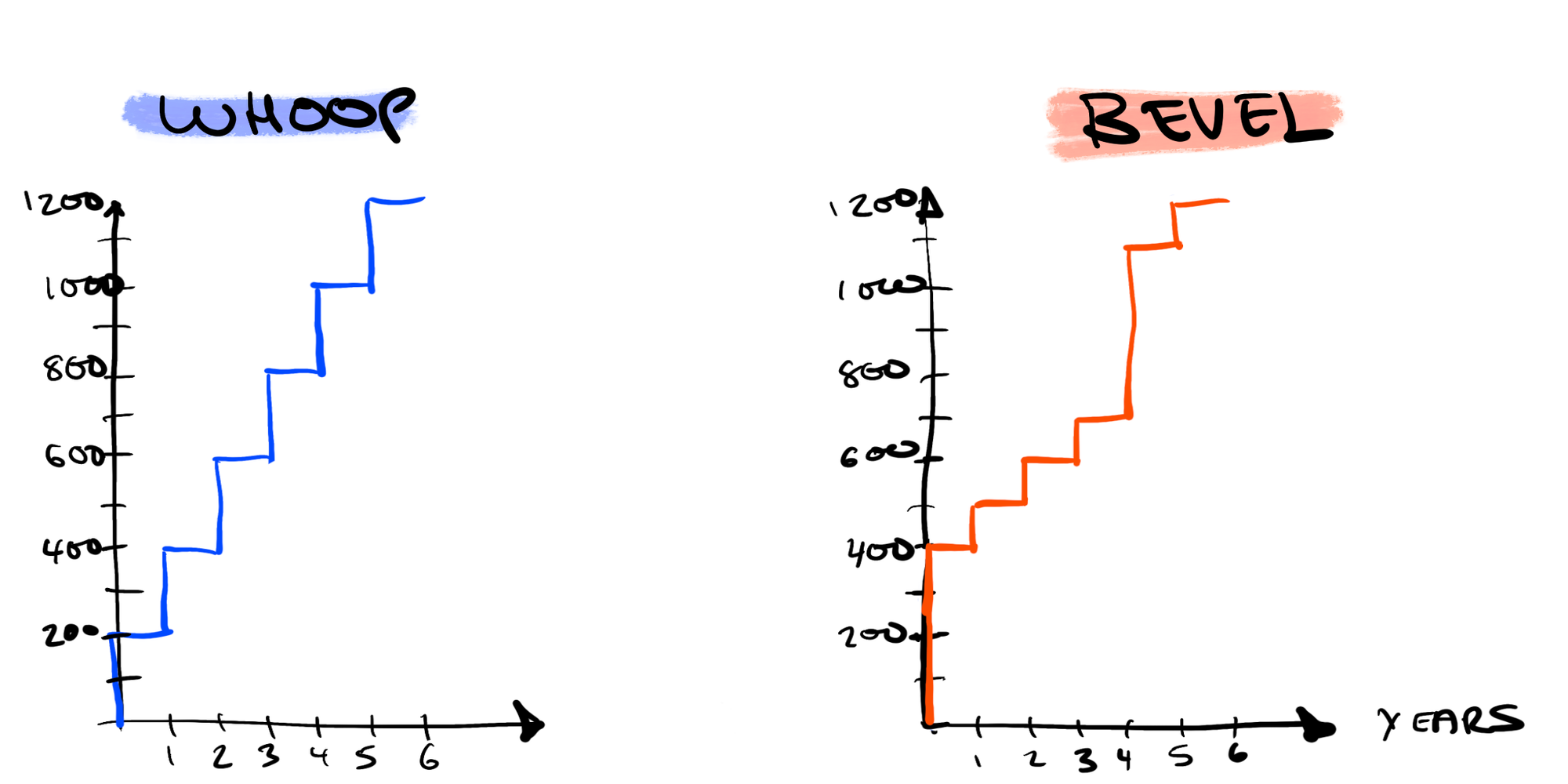
The assumption here is that Whoop simply costs $200 per year and Bevel is $100 per year with a $300 "startup" cost for a device every four years.
Can't decide? Try both.
Try WHOOP for free for 30 days.
Try Bevel Health Pro for 30 days.
Bevel vs Whoop: Accuracy and Data Quality
As for data quality: the same thing that makes Bevel great is what makes it, in my opinion, a bit fragile.
The Data Downfall
The primary appeal of Bevel lies in its hardware agnosticism: you can patch together an ideal setup using an Oura ring for sleep, a Garmin for the run, and a Wahoo head unit on the bike. However, this flexibility introduces a fundamental flaw: sensor heterogeneity.
Bevel is forced to aggregate and normalize data from a variety of proprietary sensors, each with different sampling rates, photoplethysmography (PPG) wavelengths, and internal smoothing algorithms. Because of this, the final metrics are inherently noisier and less reliable.
In contrast, Whoop operates as a tightly controlled, vertically integrated ecosystem. Its physiological algorithms are explicitly trained on the exact optical array housed within the Whoop strap. There is no middleman translating third-party APIs. Because every strap records data identically, Whoop maintains total algorithmic fidelity. This closed-loop system allows Whoop to build its sleep and recovery science on a massive, standardized dataset that has been independently validated in clinical settings, resulting in a level of consistency that an aggregated dashboard simply cannot match.
Where Bevel Still Wins
That being said, there is no shortage of examples where Whoop simply falls on its face. It’s a well known fact that a wrist-worn Whoop simply cannot record reliable HR data during HIIT and weightlifting. This is a massive problem if the entire algorithm depends on HR data being truthful and accurate.
By contrast, my Garmin does a remarkably good job capturing accurate heart rate data from the wrist, even during dynamic, high-movement workouts like weightlifting. Because the Garmin is physically larger, its sensor maintains superior skin contact compared to Whoop. Admittedly, comparing a full-sized watch to a minimalist band isn't an entirely fair fight when it comes to form factor. However, Garmin's real advantage is its flexibility. If you want absolute precision, you can easily pair a Garmin with an ECG chest strap. Since chest straps are considered the gold standard for heart rate monitoring, this is a major benefit. Whoop limits you exclusively to its own sensor because it is a closed ecosystem, making it impossible to bridge that accuracy gap.
I will mention the bicep band for Whoop makes it incredibly accurate (almost as food as an ECG). I just find it a bit strange that they market it as a wrist-based strap and then suggest wearing it on the bicep for improved accuracy.
Regardless of what happens downstream in the processing of the data, recording the best possible data at the input is something at which Bevel still technically wins.
Bevel vs Whoop: Sleep and Recovery Tracking
The sleep tracking is one of the main reasons I’m sticking with Whoop for now. I’ve tried Oura (older Gen 2) and Garmin (Fenix 7 Pro with the newer Elevate V5 sensor) and no matter what I did, these two algorithms always reported my sleep as restless and in the 60s. I’d stop checking the scores altogether because it seemed no matter what I did they were always kind of the same.
Whoop, on the other hand, has really matched how I’ve felt. More importantly, for the first time ever it’s helped me see improvements in my sleep after applying the feedback that Whoop provided. Sleep consistency has been the biggest factor which I’ve focused in on and have seen positive improvement from.
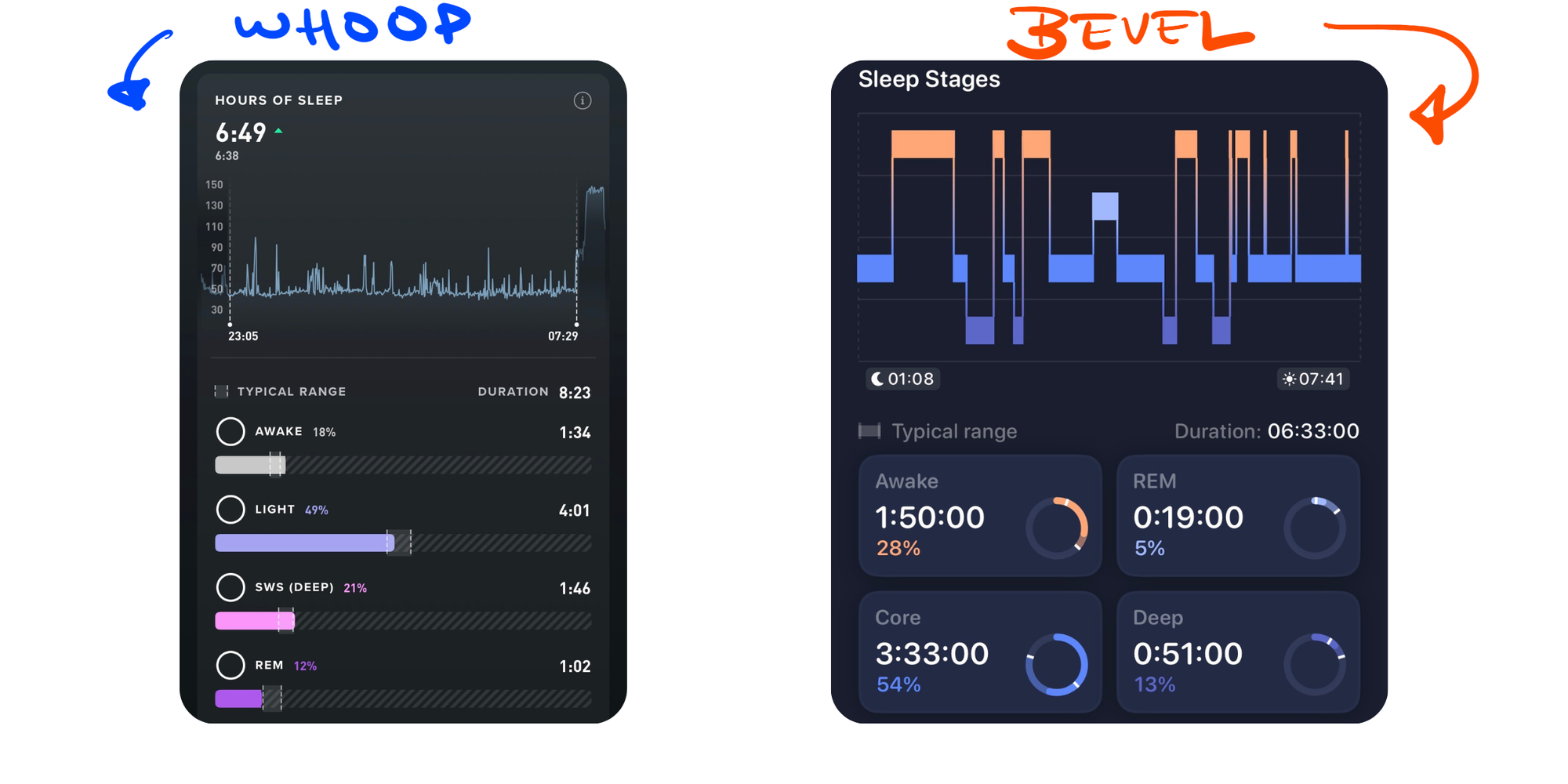
Several times Garmin has recorded the time I fell asleep to be two hours later than what Whoop detected. Almost always, my body aligns with Whoop's reading.
24/7 Wear (AKA The Mechanical Watch Problem)
Whoop solves the biggest problem in the wearable tech industry. A problem so massive, it actually never existed before:
The burning desire to make sure you never miss a second of data.
Whether that’s seeing how low your resting heart rate gets after minute twenty on the toilet, auto-detecting scrubbing your back in the shower as an activity, or seeing the stress from tying your shoes, Whoop is now with you every step of the way.
This is a level of data-tracking we’ve now become accustomed to. So much so, we now see the popular dilemma of “How will this fitness tracker coexist with my mechanical watch?”
I’m not convinced it’s necessary to wear a tracker 24/7. As far as I can reason, it’s most important to wear one during sleep and during exercise. Everything else doesn’t really matter. I want to know how hard I pushed in my workout that day, how well I recovered, and if any lifestyle factors influenced poor performance in either of these. Step count, HRV after a cup of coffee, or HR spike after climbing a set of stairs are just tiny drops in the Ocean of health.
In conclusion… If you are interested in wearing your Whoop 24/7 as the company directs (which I do, to be clear), a massive pro is that you can wear a bicep band, freeing up your wrist for a watch of your choosing (please don’t say Apple Watch) and actually improve HR accuracy.
Side note: after being introduced to the world of Whoop and how needy it is, demanding to be worn non-stop, I could definitely see myself going back to my Garmin for daily wear and having the peace of mind to simply switch to my mechanical watch for a nice dinner or event, not longing for the lost data.
Which Should You Choose: Whoop or Bevel?
- The best UI and app experience
- Top quality sleep data
- A company that seems to be heavily investing in sport and recovery science
- Always-recording, high-fidelity data
- A comfortable form factor
- You already own a top-notch wearable
- You have complete control over the data you input
- Nutrition and meal logging (although a bit clunkier than a dedicated app)
- You value truly owning all your data
Which One I'm Sticking With
For now? Whoop. In the future? Maybe Bevel! I’d like to see a few improvements in the Bevel app first.
Some days I do miss wearing my Garmin 24/7—between the red light for searching in the dark and having a stopwatch readily available, I do feel I lose some things with Whoop. That’s mostly because I haven’t fully accepted the idea of wearing the Whoop on my right wrist or moving it to the bicep after waking up.
Frequently Asked Questions
Q Is Bevel as good as Whoop?
A In my opinion, no. Not yet.
Q How much does Bevel cost, and is it still free?
A They do have a free version that does provide a decent alternative to Garmin Connect, for example.
Q Is Whoop worth the subscription?
A I’d say it definitely depends. It’s changed people’s lives for the better, so maybe that’s worth $25 a month.
Q Is Bevel accurate?
A Yes… as long as your device gathering the data is high quality. Bevel just aggregates the data you collect.
Q Why are my Garmin workouts showing up twice in Bevel?
A One of the “sloppy” problems presented with Bevel. Sometimes you have to get creative with which apps you allow to write into Bevel from Apple Health.
Q How do I get Zwift rides into Bevel?
A YES! I tried so many ways to make this work. The only way I could get it to do so successfully was linking Zwift -> Wahoo -> Apple Health -> Bevel.
Your Support
I write everything for free in the hopes that it will inspire and educate on what it’s like to fly planes in the world’s greatest Navy and to spread the joys of aviation in general. I don't run ads and I don't put anything behind a paywall.
If you enjoyed this article, you can show your support by checking out my store on Etsy, where I sell really cool aviation-themed streetwear clothing. It’s all designed by me, a real-life, very-average fighter pilot.

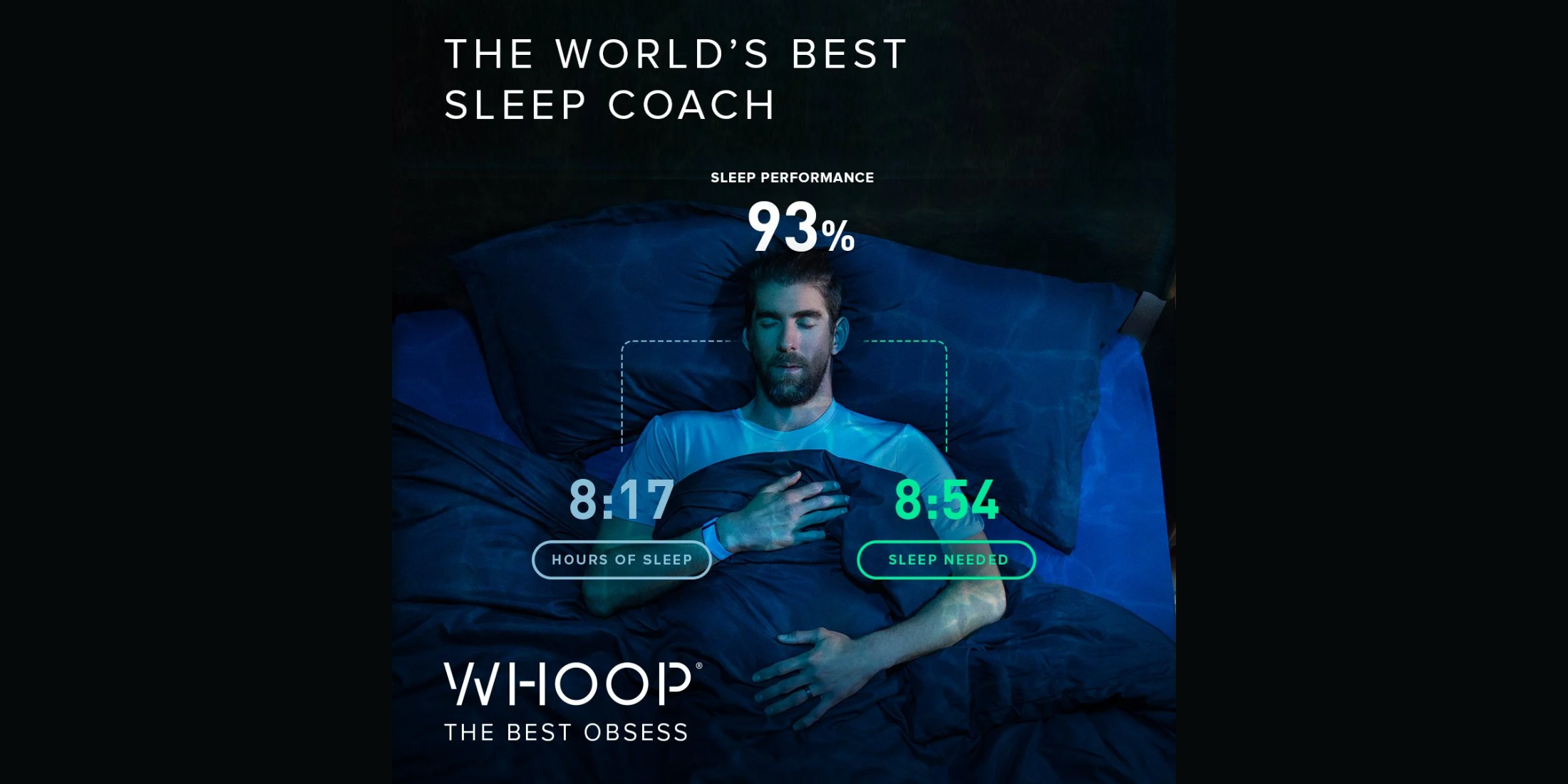
Also, if you're interested in Whoop and how it can help in your fitness journey, you can try a one month free trial. I'm not sponsored but it does help me to continue to write on topics and tech that help pilots and fitness enthusiasts.
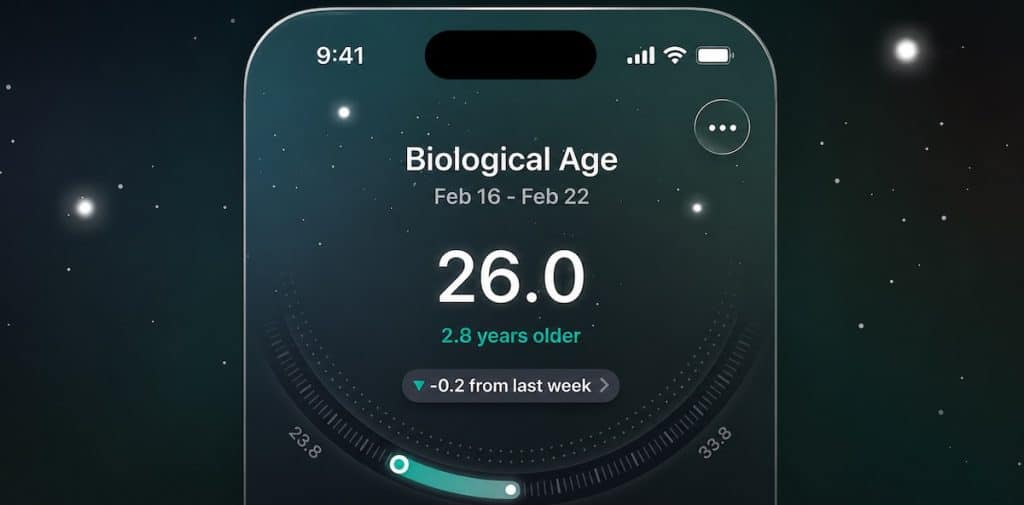
Or, if you think you'd prefer to give Bevel Health (my favorite app to use with my Garmin Fenix) a go, you can also try one month free.
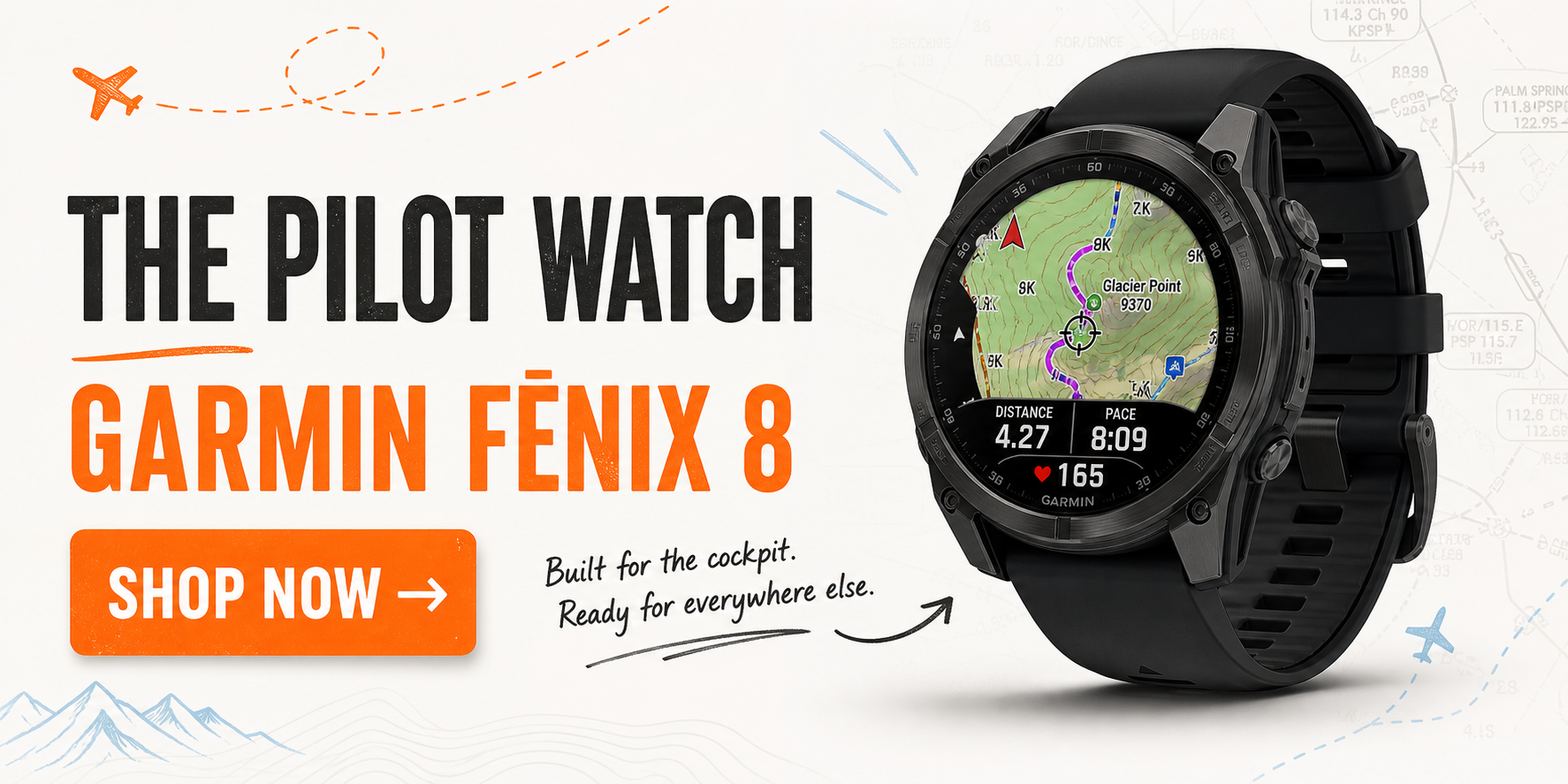
And finally, if you are interested in the best fitness watch on the planet, worn by thousands of pilots worldwide, check out Garmin. I'm not sponsored, they just make one hell of a product. If you shop through my Amazon affiliate link, I make a small commission at no cost to you. It's not quite enough to pay for weekend gas in the Cessna, but it does help cover a couple of beers. Thank you!
Let me know if you decide to try any of them out and what your thoughts are! I love talking tech.
-Will!